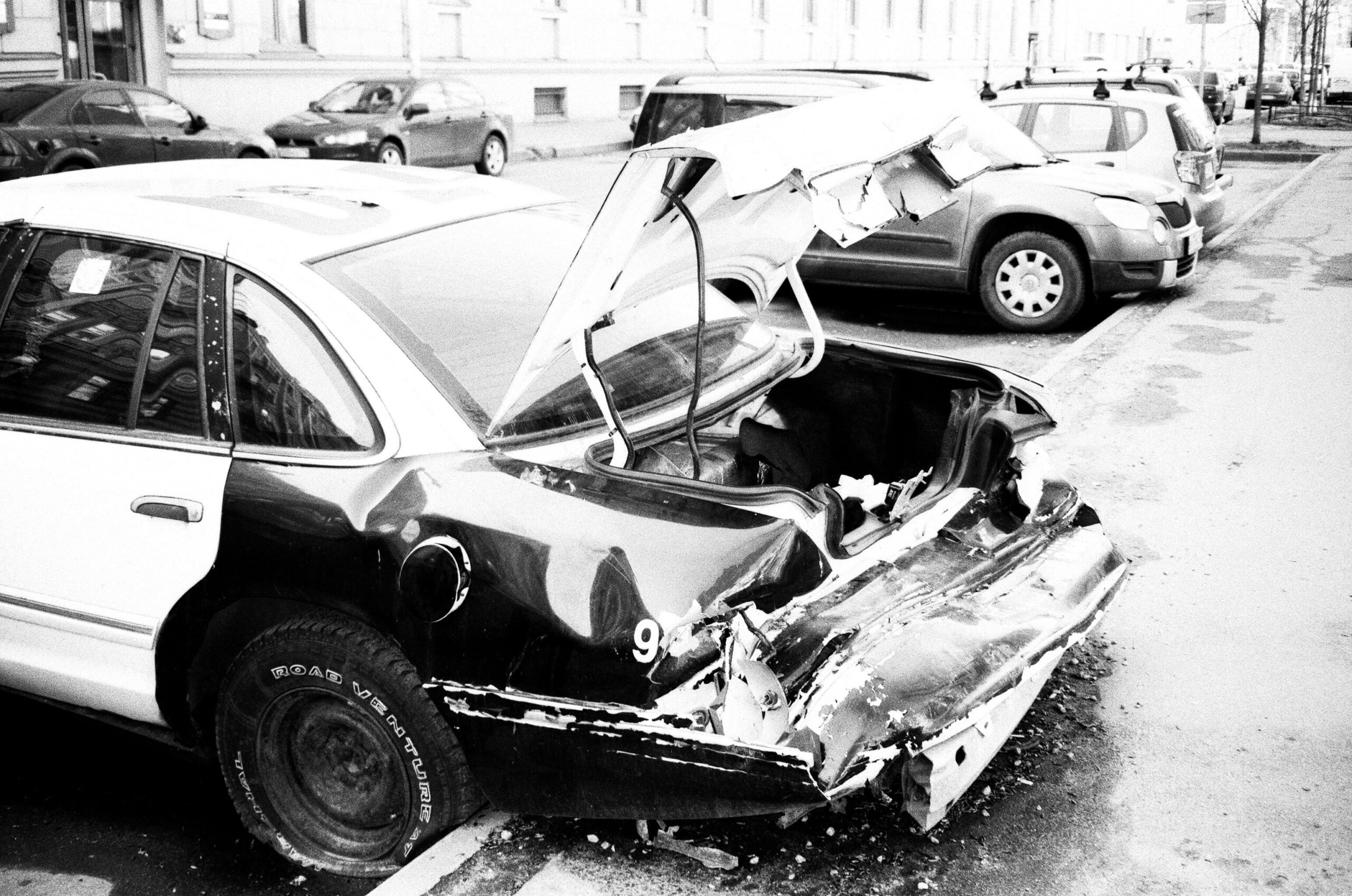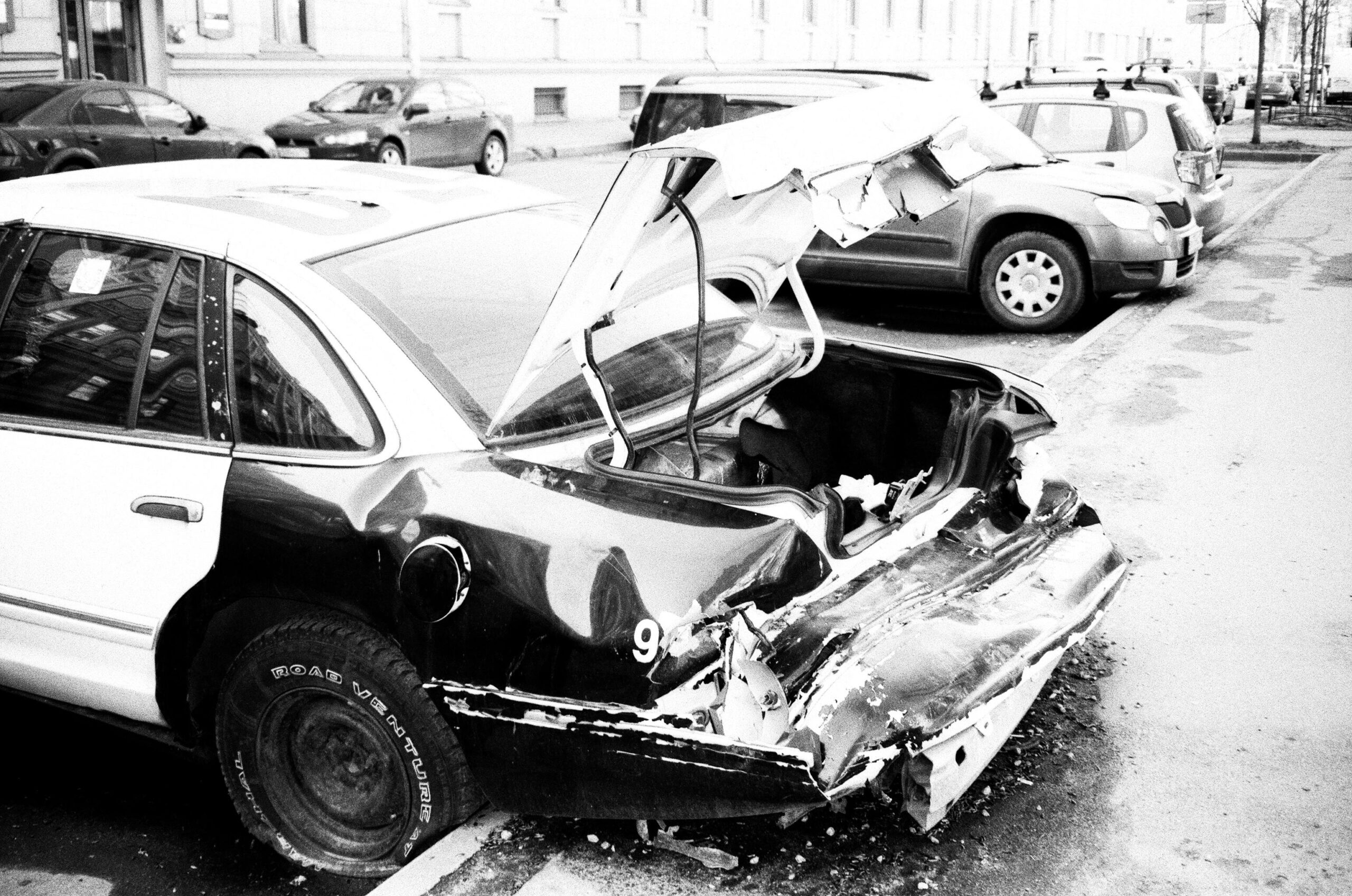
Understanding collision-risk models is essential for safe navigation in aviation, maritime operations, and space exploration. These models help prevent catastrophic accidents by predicting potential impacts.

🔍 The Foundation: What Are Collision-Risk Models?
Collision-risk models serve as mathematical frameworks designed to assess the likelihood of objects colliding in three-dimensional space. Whether guiding aircraft through busy airspace, ships across congested waterways, or satellites orbiting Earth, these models provide critical safety assessments that inform decision-making processes.
The transportation industry relies heavily on these predictive tools to maintain separation standards and establish safe operating procedures. As technology advances and traffic density increases across all domains, the accuracy and reliability of collision-risk models become increasingly paramount to operational safety.
Two distinct approaches dominate this field: probabilistic and deterministic models. Each methodology offers unique advantages and limitations, making the choice between them a crucial decision for safety professionals and system designers.
⚖️ Deterministic Models: The Predictable Path
Deterministic collision-risk models operate on the principle that given identical initial conditions, outcomes will always be the same. These models assume perfect knowledge of all variables affecting trajectory and position, creating a binary assessment: collision will occur or it will not.
The deterministic approach excels in controlled environments where parameters can be precisely measured and predicted. Aviation applications particularly benefit from this methodology when calculating minimum separation distances between aircraft following established flight paths.
Key Characteristics of Deterministic Models
Deterministic models feature several defining attributes that shape their application and effectiveness:
- Precise calculations based on known trajectories and velocities
- Clear yes-or-no outcomes regarding collision potential
- Minimal computational requirements for basic scenarios
- High reliability when input data is accurate and complete
- Straightforward implementation in automated systems
These models typically employ geometric calculations to determine if two objects’ paths will intersect within a specified timeframe. The mathematical simplicity makes them attractive for real-time applications where rapid decision-making is essential.
Limitations in Complex Environments
Despite their advantages, deterministic models face significant challenges in realistic operational scenarios. Environmental uncertainties, measurement errors, and unpredictable variables can dramatically reduce accuracy. Wind shear, navigation system errors, and human factors introduce variability that deterministic approaches struggle to accommodate.
The assumption of perfect information rarely holds true in practical applications. Aircraft positions contain inherent uncertainties from GPS precision, atmospheric conditions affect trajectories unpredictably, and communication delays introduce temporal discrepancies that compound positioning errors.
🎲 Probabilistic Models: Embracing Uncertainty
Probabilistic collision-risk models acknowledge that uncertainty is inherent in navigation systems. Rather than providing binary collision predictions, these models calculate the probability of collision occurring, expressing risk as a percentage or numerical likelihood.
This approach incorporates statistical distributions to represent uncertainty in position, velocity, and other critical parameters. By modeling variables as probability distributions rather than fixed values, these systems provide more realistic risk assessments for complex scenarios.
The Statistical Foundation
Probabilistic models leverage advanced statistical techniques to quantify risk. They consider multiple sources of uncertainty simultaneously, creating comprehensive risk profiles that reflect real-world complexity.
Monte Carlo simulations frequently support probabilistic assessments, running thousands of scenarios with varied input parameters to generate probability distributions for potential outcomes. This computational intensity delivers nuanced risk information that deterministic models cannot provide.
Gaussian distributions often represent position uncertainty, with standard deviations reflecting navigation system accuracy. As objects move through space, these uncertainty regions grow, and probabilistic models track how overlap between these regions translates to collision risk.
Advantages in Modern Navigation
The probabilistic approach offers several compelling benefits for contemporary navigation challenges:
- Realistic representation of measurement uncertainty and environmental variability
- Graduated risk levels enabling nuanced decision-making
- Ability to incorporate multiple uncertainty sources simultaneously
- Better alignment with human risk perception and management strategies
- Flexibility to update predictions as new information becomes available
These models particularly shine in space operations, where tracking uncertainties are substantial and collision consequences catastrophic. Satellite collision avoidance systems rely heavily on probabilistic assessments to determine when evasive maneuvers are warranted.
🚁 Aviation Applications: Where Models Meet Reality
The aviation industry employs both modeling approaches depending on specific operational contexts. Air traffic control systems traditionally relied on deterministic methods to maintain separation standards, establishing minimum distances between aircraft that provided safety buffers.
Modern Traffic Collision Avoidance Systems (TCAS) incorporate probabilistic elements while maintaining deterministic core logic. These hybrid approaches recognize that absolute certainty is unattainable while still providing clear operational guidance to pilots.
Separation Standards and Risk Tolerance
Aviation authorities establish separation minima based on worst-case deterministic scenarios combined with probabilistic safety targets. The goal is maintaining collision risk below one in ten million flight hours, a probability threshold derived from extensive safety analysis.
Reduced separation minima programs, such as those enabling closer spacing on parallel runways, leverage sophisticated probabilistic models to demonstrate equivalent safety levels. These analyses consider navigation performance, meteorological conditions, and operational procedures comprehensively.
| Operation Type | Primary Model Type | Typical Risk Threshold |
|---|---|---|
| En-route Separation | Deterministic | 5 nautical miles |
| Parallel Approach | Probabilistic | 1×10⁻⁹ per approach |
| TCAS Alerts | Hybrid | Variable by phase |
| Oceanic Operations | Probabilistic | 1×10⁻⁹ per flight hour |
🌊 Maritime Navigation: Charting Safe Courses
Maritime collision avoidance presents unique challenges due to vessel maneuverability characteristics, weather impacts, and congested waterways. Ships respond slowly to course changes, requiring earlier collision detection and intervention than faster-moving aircraft.
Electronic Chart Display and Information Systems (ECDIS) incorporate collision-risk algorithms that predominantly use deterministic approaches for immediate threats while employing probabilistic methods for longer-term route planning through traffic separation schemes.
The Human Element at Sea
Maritime operations retain significant human decision-making authority, with automated systems serving advisory roles. Deterministic models provide clear closest point of approach (CPA) calculations that mariners understand intuitively, supporting rapid situational assessment.
Probabilistic elements enter through weather routing systems that optimize courses based on forecasted conditions and their inherent uncertainties. These systems calculate probability distributions for arrival times and fuel consumption under various scenarios.
🛰️ Space Domain: Where Stakes Are Highest
Orbital collision-risk assessment relies almost exclusively on probabilistic models due to substantial tracking uncertainties and the catastrophic consequences of impacts. The Kessler Syndrome—cascading debris generation from collisions—makes space safety uniquely critical.
The U.S. Space Surveillance Network tracks thousands of orbital objects, but position uncertainties range from meters to kilometers depending on object size, altitude, and tracking frequency. Probabilistic models translate these uncertainties into collision probabilities for conjunction analysis.
Conjunction Assessments and Maneuver Decisions
When two space objects’ predicted paths approach within defined thresholds, conjunction assessments calculate collision probability. Operators typically consider maneuvers when probability exceeds one in ten thousand, though thresholds vary by mission criticality and maneuver cost.
These calculations incorporate covariance matrices representing three-dimensional position uncertainty for each object. As conjunction time approaches, tracking refinements reduce uncertainty, updating probability estimates and informing go/no-go decisions for collision avoidance maneuvers.
The probabilistic approach acknowledges that some conjunctions with seemingly high collision probability result from tracking errors rather than actual close approaches. This prevents unnecessary maneuvers that consume limited propellant and disrupt mission operations.
🔬 Technical Deep Dive: Mathematical Foundations
Understanding the mathematical underpinnings reveals why these approaches perform differently under various conditions. Deterministic models typically employ computational geometry, calculating miss distances from trajectory vectors and velocities.
The fundamental deterministic question asks: given current positions and velocities, will paths intersect? Algorithms compute closest approach distance and time, comparing results against minimum separation requirements. Computational efficiency makes real-time application feasible even with limited processing power.
Probabilistic Complexity
Probabilistic models introduce substantially greater mathematical complexity. They represent object states as multivariate Gaussian distributions, with mean vectors indicating most likely positions and covariance matrices capturing uncertainty.
Collision probability calculations integrate the probability density function over regions where objects’ physical volumes overlap. For spherical objects with Gaussian position uncertainties, analytical solutions exist, but complex geometries require numerical integration techniques.
Bayesian updating allows probabilistic models to incorporate new measurements systematically, refining predictions as additional data becomes available. This adaptive capability provides dynamic risk assessment that evolves with information quality.
💡 Hybrid Approaches: Best of Both Worlds?
Recognizing limitations in pure deterministic or probabilistic approaches, modern systems increasingly employ hybrid methodologies. These frameworks leverage deterministic efficiency for initial screening while applying probabilistic rigor to identified threats.
Aviation’s TCAS exemplifies this strategy, using deterministic range and altitude criteria to identify potential threats rapidly, then applying more sophisticated logic incorporating uncertainty to generate resolution advisories.
Hybrid models also enable tiered alert systems matching response urgency to risk level. Low-probability threats generate monitoring alerts, moderate risks trigger enhanced surveillance, and high-probability scenarios demand immediate action.
Implementation Considerations
Deploying hybrid systems requires careful interface design between deterministic and probabilistic components. Threshold selection for transitioning between methodologies significantly impacts system performance and alert rates.
Computational resource allocation must balance real-time deterministic processing demands against probabilistic analysis requirements. Edge computing and cloud resources increasingly support this division, with local systems handling immediate deterministic needs while offloading complex probabilistic calculations.
🎯 Choosing Your Model: Decision Factors
Selecting appropriate collision-risk methodology depends on multiple operational and technical factors. No universal solution fits all applications; context determines optimal approach.
When position accuracy is high and environmental predictability good, deterministic models provide sufficient safety with minimal computational overhead. Controlled airspace with radar surveillance and transponder data meets these criteria well.
Conversely, high uncertainty environments demand probabilistic approaches despite computational costs. Space operations, long-range maritime routing, and autonomous vehicle navigation in dynamic conditions benefit from explicit uncertainty quantification.
Key Selection Criteria
- Measurement accuracy and reliability of tracking systems
- Environmental predictability and variability
- Available computational resources for real-time processing
- Regulatory requirements and accepted industry standards
- Consequence severity of potential collisions
- Operator training and system comprehension needs
- Integration requirements with existing infrastructure
🚀 Future Directions: Emerging Technologies
Artificial intelligence and machine learning are transforming collision-risk modeling. Neural networks trained on historical conjunction data can identify patterns that traditional models miss, improving prediction accuracy for complex scenarios.
Quantum computing promises revolutionary advances in probabilistic calculations, potentially enabling real-time Monte Carlo simulations with millions of iterations rather than thousands. This computational leap could make sophisticated probabilistic analysis feasible for applications currently limited to deterministic approaches.
Sensor fusion techniques combining data from multiple tracking sources reduce uncertainty in probabilistic models while providing redundancy for deterministic systems. Cooperative surveillance, where vehicles share precise position data directly, dramatically improves both modeling approaches.
Autonomous Systems and Model Integration
Fully autonomous vehicles, whether aerial, maritime, or terrestrial, require sophisticated collision-risk assessment integrated directly into control systems. These applications increasingly favor probabilistic approaches that provide gradated risk information enabling optimized path planning.
The transition from advisory systems supporting human operators to fully automated decision-making raises the stakes for model accuracy and reliability. Verification and validation processes must demonstrate safety across vast operational design domains encompassing diverse conditions.

✈️ Navigating Forward with Informed Confidence
The choice between probabilistic and deterministic collision-risk models is not binary opposition but rather complementary tools serving different needs. Deterministic approaches offer computational efficiency and operational simplicity where applicable, while probabilistic methods provide realistic risk quantification for uncertain environments.
Modern navigation increasingly relies on hybrid systems combining both methodologies’ strengths. As computational capabilities expand and tracking accuracy improves, probabilistic models will likely become more prevalent across all domains, though deterministic approaches will retain roles where simplicity and speed are paramount.
Understanding these modeling approaches empowers operators, system designers, and safety professionals to make informed decisions about appropriate methodologies for their specific applications. Neither approach is universally superior; context determines which framework best serves safety objectives.
The ultimate goal remains unchanged regardless of methodology: preventing collisions through accurate risk assessment and timely intervention. Whether navigating crowded airspace, congested shipping lanes, or debris-filled orbits, choosing and implementing appropriate collision-risk models enables confident navigation through increasingly complex operational environments.